
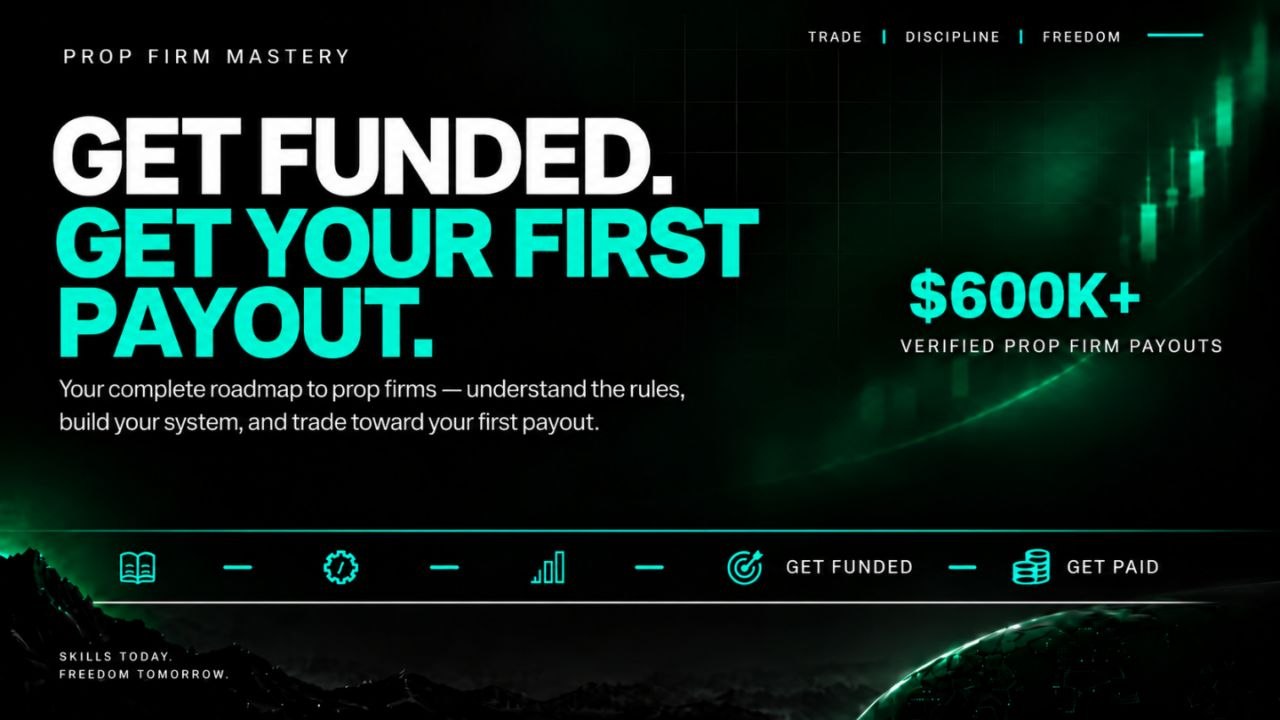
Arman Sangha: Prop Firm Mastery – Course
$249.00 Original price was: $249.00.$35.00Current price is: $35.00.
- 24/7 Contact Support & Telegram - Ecomkevin_1
- You Can Request Any Courses
- Original Courses HD Qualite and links updated
Guaranteed Safe Checkout


Arman Sangha: Prop Firm Mastery – Course
Learn About Prop Firm Trading and Funded Account Strategies
Arman Sangha: Prop Firm Mastery – Course is a course for traders who want to understand proprietary trading firms and the process of pursuing a funded trading account. It is relevant to those exploring prop firm challenges, trading evaluations, risk management, and structured trading approaches.
Prop firm trading can offer opportunities for traders who meet a firm’s evaluation requirements. However, it also involves strict rules, performance targets, and financial risks. Therefore, understanding how prop firms operate is an important step before attempting an evaluation.
With an interest in prop firm trading, traders often want to learn how funding programs work, how evaluations are structured, and how to approach trading with greater discipline. This course is intended for people exploring these topics and looking to develop a more informed approach to the prop firm trading environment.
Whether you are learning about funded accounts for the first time or already have experience with financial markets, understanding the fundamentals can help you make better-informed decisions.
What Is Arman Sangha: Prop Firm Mastery?
Arman Sangha: Prop Firm Mastery is a course focused on the subject of prop firm trading. Proprietary trading firms, commonly known as prop firms, offer programs through which eligible traders can qualify to trade under specific account conditions.
These programs usually involve an evaluation process. Traders must follow the firm’s rules while demonstrating their ability to manage risk and meet defined performance requirements. The exact rules vary between providers.
For this reason, prop firm trading requires more than identifying potential market opportunities. Traders must also understand account limits, drawdown restrictions, trading objectives, and the importance of following a consistent plan.
The course title makes it relevant to traders researching funded trading programs and the skills associated with them. Before enrolling, buyers should review the available course materials to confirm the specific topics, lessons, and resources included.
Understanding the Prop Firm Trading Process
Before exploring a prop firm trading course, it helps to understand the general process involved in pursuing a funded account.
1. Understanding Prop Firms
Prop firms operate under different business models and account structures. Some offer evaluations that traders must pass before receiving access to a funded account. Others may use alternative assessment arrangements.
Each provider sets its own conditions. These may include profit targets, maximum daily losses, overall drawdown limits, minimum trading days, and restrictions on particular trading strategies.
Consequently, traders should read the rules carefully before choosing a program. Understanding these conditions can help prevent avoidable mistakes during an evaluation.
2. Learning About Trading Evaluations
Many funded account programs require traders to complete an evaluation. During this process, participants must meet specific objectives without violating the account rules.
Although the requirements differ, traders may need to demonstrate consistency, risk control, and the ability to follow the program’s trading conditions.
Moreover, reaching a profit target does not automatically mean a trader has followed every rule. A single violation can affect eligibility, even when the account has generated a profit.
Learning how evaluations work can help traders prepare more carefully and understand the responsibilities involved.
3. Developing Risk Awareness
Risk management is an important consideration in financial trading. Traders can experience losses, and no strategy guarantees profitable results.
In a prop firm environment, the rules surrounding losses may be particularly important. For example, a firm may impose daily loss limits or calculate drawdown using a specific method.
Therefore, traders should understand how these limits work before placing trades. They should also consider how position sizing, stop-loss placement, and exposure can affect their accounts.
4. Building a Structured Trading Approach
A structured approach can help traders avoid impulsive decisions. Instead of entering trades without a plan, they can define their risk limits and establish clear criteria for reviewing opportunities.
Furthermore, maintaining a trading journal can help identify recurring mistakes. Reviewing past decisions may reveal whether a trader consistently follows their plan or changes it under pressure.
A disciplined process does not remove market uncertainty. Nevertheless, it can make trading decisions easier to review and improve over time.
What You Can Explore With This Course
Arman Sangha: Prop Firm Mastery – Course is relevant to several important areas of funded trading. The following topics describe the broader subject areas buyers may want to understand. They are not a verified list of the course’s individual lessons or modules.
Prop Firm Fundamentals
Learn about the general structure of proprietary trading firms and their funded account programs. Understanding the differences between providers can help traders assess which arrangements fit their experience and objectives.
Additionally, becoming familiar with common terminology can make it easier to interpret evaluation rules and account conditions.
Funded Account Evaluations
Explore how evaluation programs generally work and why traders must pay attention to their requirements. These may include performance objectives, trading-day conditions, and account restrictions.
Before selecting a challenge, compare its rules with your experience and available risk budget. In this way, you can make a more informed decision instead of choosing a program based only on its advertised account size.
Trading Discipline
Discipline plays an important role in a structured trading process. Traders need to follow their plans, respect predefined limits, and avoid making decisions based purely on emotion.
For example, chasing losses can lead to unnecessary exposure. Similarly, increasing position sizes after a winning trade may introduce risks that were not part of the original plan.
Developing consistent habits can help traders evaluate their decisions more objectively.
Risk Management Principles
Risk management involves understanding the possible downside of a trade before entering it. It also means considering how individual losses may affect the overall account.
In addition, traders should understand the difference between a trading strategy’s potential and its actual performance. Historical results do not guarantee future outcomes.
A sound understanding of risk is essential when working within a prop firm’s trading restrictions.
Trading Performance Review
Reviewing trading activity can help identify patterns in decision-making. Traders may record their entry reasons, exit decisions, position sizes, and adherence to their trading rules.
Over time, this information can provide a clearer picture of their strengths and weaknesses. However, performance reviews should be based on accurate records rather than assumptions or isolated results.
Who Is This Course Suitable For?
Arman Sangha: Prop Firm Mastery – Course may be relevant to several types of learners who want to explore the funded trading environment.
Beginners researching prop firms: If you are new to funded trading, understanding the basic terminology and evaluation process can help you research available programs more confidently.
Traders considering a funded account: If you already trade and want to explore prop firm challenges, learning about evaluation rules and account restrictions can support your preparation.
Traders seeking greater discipline: Traders who want to review their approach to planning, risk awareness, and consistency may find the subject matter relevant to their learning goals.
Self-directed learners: If you prefer to study trading-related material independently, this course may be worth considering after you verify its format and included resources.
Experienced traders exploring different programs: Traders with existing market experience may want to investigate how funded account conditions differ between providers.
The course’s exact difficulty level and prerequisites should be confirmed from its official course information before purchase.
Key Benefits of Learning About Prop Firm Trading
Understand the Funded Trading Environment
Learning how prop firms operate can help you understand the opportunities and limitations associated with funded account programs. As a result, you can evaluate providers with greater awareness.
Make More Informed Decisions
Understanding evaluation rules and account conditions can help you compare programs more carefully. Instead of focusing only on potential rewards, you can consider the requirements and risks involved.
Improve Your Awareness of Risk
Risk management is essential in trading. Learning about drawdown, exposure, and loss limits can help you recognise why protecting capital matters.
Encourage Consistent Trading Habits
A structured process can make it easier to review decisions and identify mistakes. Moreover, keeping records of your trades can support a more objective assessment of your performance.
Develop a Clearer Learning Direction
Trading education can help you identify areas that require further study. Depending on your current experience, these may include market analysis, trading psychology, risk management, or evaluation requirements.
These benefits depend on the quality of the learning material and how you apply what you learn. No educational course can guarantee that you will pass a prop firm challenge or generate profits.
Why Research Matters Before Choosing a Prop Firm Course
The funded trading market includes many providers, each with its own terms and conditions. Therefore, buyers should review both the course information and the rules of any prop firm they intend to use.
Start by confirming the course creator, access format, included materials, and any prerequisites. Next, check whether the lessons cover the areas you want to study.
It is also important to distinguish educational content from promotional claims. A large simulated account balance does not necessarily represent personal capital available to withdraw. Likewise, passing an evaluation does not guarantee future profitability.
Finally, review the relevant firm’s current policies. Rules can change, and a strategy that fits one program may not be permitted under another.
Frequently Asked Questions
What is Arman Sangha: Prop Firm Mastery – Course?
Arman Sangha: Prop Firm Mastery – Course is a course identified with the subject of prop firm trading. Buyers interested in funded accounts can review its official details to determine the specific lessons and resources provided.
Who should consider this course?
It may interest beginners researching prop firms and traders exploring funded account evaluations. Before purchasing, check the course’s stated experience level and prerequisites.
Does the course guarantee a funded trading account?
No course should be assumed to guarantee a funded account. Qualification depends on the relevant provider’s rules, evaluation process, and the trader’s performance.
Can beginners learn about prop firm trading?
Beginners can study the fundamentals of prop firm trading. However, they should first understand basic market concepts and the risks associated with trading before committing money to an evaluation.
Does prop firm trading involve risk?
Yes. Trading involves the possibility of losses, and funded account programs may impose strict limits and conditions. Traders should read all terms carefully and avoid risking money they cannot afford to lose.
What topics should I verify before purchasing?
Check the official course outline, lesson list, access period, format, prerequisites, and any included resources. These details help you determine whether the material matches your learning goals.
Will this course help me pass a prop firm challenge?
The outcome cannot be guaranteed. Passing an evaluation depends on the firm’s requirements, your trading decisions, market conditions, and your ability to follow the rules.
Is this course suitable for experienced traders?
It may be relevant to experienced traders who want to investigate prop firm programs. However, reviewing the actual curriculum is the best way to assess its suitability for your existing knowledge.
Final Thoughts
Arman Sangha: Prop Firm Mastery – Course is a relevant option to investigate if your learning goals involve proprietary trading firms, funded account evaluations, and the discipline required in a structured trading environment.
Before purchasing, review the available course details and confirm that its content matches your expectations. In addition, take time to understand the rules of any prop firm you plan to use.
Successful trading requires preparation, risk awareness, and realistic expectations. No course can eliminate uncertainty or promise a particular financial outcome. Nevertheless, informed learning and careful evaluation can help you approach the prop firm trading environment with a clearer understanding of its requirements and risks.
Important Risk Disclaimer: Trading financial markets involves substantial risk. Prop firm evaluations may have strict rules, fees, and loss limits. Educational material does not constitute financial advice or guarantee funding, profits, or trading success. Always verify the course details and the relevant provider’s current terms before making a purchase.
